

Homer | The Veteran in a New Field | 1865 | Oil on canvas | Metropolitan Museum of Art | Manhattan | United States
WELCOME:
Art, Science and Theology are my homeostasis. So, it only makes sense to add to the 14 Stories I Like with the parable of The Farmer Scattering Seed pictured with Homer’s portrait, “The Veteran in a New Field.” Blur your eyes and Homer’s painting will look like an intense Yellow-Orange field of fire.
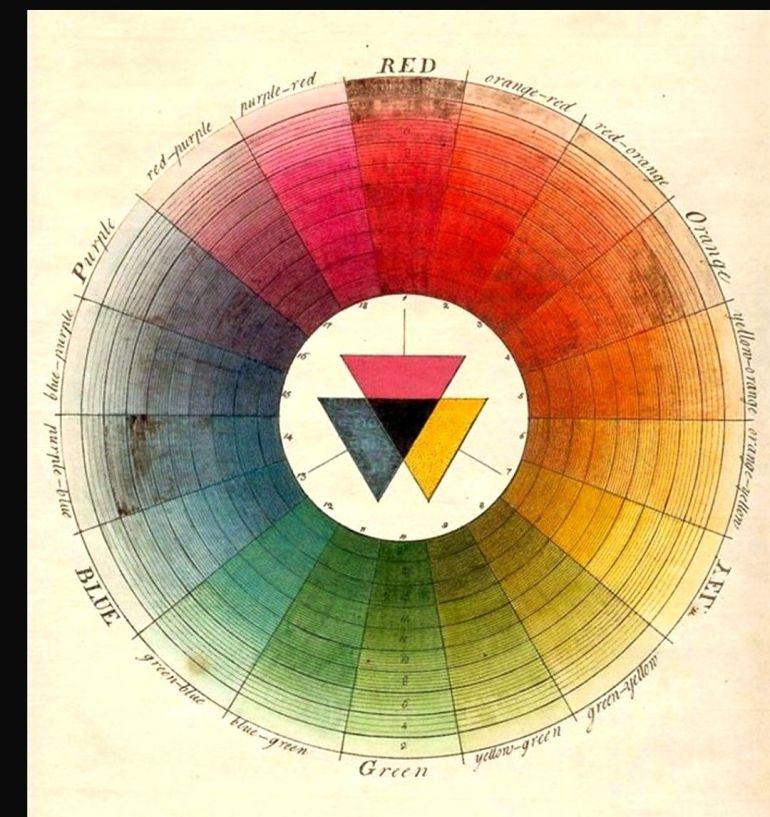
Color Wheel
Warm Orange +++ Cool Blue are on opposite sides of the color wheel, called compliments, because they compliment each other. Contrast is also created here with color. Although color comes with it’s own baggage, they look beautiful placed side by side, and when you mix a certain amount and brand of these two pigments you end up with semi-neutral grays and a perfect neutral gray. This neutral gray vibrates. I see gray in the painting, but I don’t know which gray it is. Pure color on the edges make the orange field come forward, and tinting the blue makes it recede.
Jesus is communicating some unknown mysteries of the Kingdom of God. He is communicating the establishment of His Kingdom and how to become a Christian by planting seed. The real Kngdom is a principle planted in my heart. God has a unique ability of making things grow for us. He’s the able one.
There are no secrets to this story recorded in Matthew 13, Mark 4 and Luke 8 — only conjectures. Only conjectures. There are four places where seeds are going to fall, all soils have the same seed sown on them. The different soils are four types of listeners who are yet to be determined. I do not believe in predestination.
A good listener makes a response and looks for a deeper meaning. We have a part to play. Those who become invested are measured more.
All soils point to the risk of failure, but only one soil dreams up the abundant outccome of success. I understand this parable pertains to the condition of my ♡.
The Kingdom of God is of a different nature than what I think of as greatness. The Kingdom of God does not stop in it’s understanding. From here on out, I will look at farming differently, I will look at the soil differently, I will look at seeds differently, I will look at the world differently, I will look at my ♡ differently. I hope you will too.
CAFE QUESTIONS
What do I understand from nature? What do I understand of human nature? Where are my affections? Where are my thoughts? Where are my energies? Where am I? What’s really important to me?
HYMNS & MUSIC
♪ I’m Going Home ♪ by Natalie Bergman
PSALMS @ Psalm 104, NLT
THE LORD’S PRAYER @ Matthew 6:9b-13, KJV
SCRIPTURE
24 “I tell you the truth, those who listen to my message and believe in God who sent me have eternal life. They will never be condemned for their sins, but they have already passed from death into life. // John 5:24, NLT
Narrate the BACKGROUND @ Mark 4:1-2, NLT
Parable of the Farmer Scattering Seed. 4:1.Once again Jesus began teaching by the lakeshore. A very large crowd soon gathered around him, so he got into a boat. Then he sat in the boat while all the people remained on the shore. 2 He taught them by telling many stories in the form of parables, such as this one:
This is where our story begins. NARRATE the STORY @ Mark 4:3-34, NLT
WONDERING QUESTIONS
Did anyone use Miracle Gro? Did the farmer scatter seed on the edge of the field?
Let us get into the CHARACTERS of the story.
A GREAT MULTITUDE, THE CROWD: AN EXPERIENCE LIKE MANURE
I am the dirt, not in a derogatory fashion, that’s not the idea. The people that grew to love Jesus the most came from an experience that we would call manure. Their lives were not putb together. You know who had their lives put together? The Pharisees. The religious leaders. I think most of us look pretty well put together. Dirt cleans easier than blood.
In a pandemic, disaster, trajedy, illness or persecution, God is preparing the soil to receive the seed. It’s a prime opportunity to plant seeds at an angle for the gospel. It’s about timing. When farmers farm, there’s a season to plant seeds.
Maybe I want to show up in that great multitude or maybe I don’t need that crowd. Maybe I’ve been a Christian now for awhile and I’ve lost my necessity of Christ. Maybe I’ve lost my nearness to him. Maybe I have forgotten that I came from manure. Maybe I have forgotten the text that says, I am but dust.
What did we learn about the WORD of GOD in this story?
A SEED IN EVERY PLANT: 200 PLANTS IN MY BIBLE GARDEN
https://www.csu.edu.au/special/accc/biblegarden/plants-of-the-garden
The primary goal of every seed is mass reproduction, mass multiplication. The tree of Heaven is an invasive tree that can produce millions of viable seeds in it’s lifetime. I think invasiveness is an illustration of how Satan works. Satan will overtake all of our native species and what was meant to be there, will die there.
The Word of God is the seed scattered in the field, the world. Unless a seed dies, it won’t live, it will not reproduce, it will not multiply. I will experience little deaths until the day I stop breathing. Is this any more than what we’ve been called to as Christians?
We are called to be disciplers. They’re still training missionaries which means someone is going to replicate my DNA. I should have some good genes to pass on, but I can’t get that DNA if I don’t receive it from the master worker. If I don’t receive the righteousness of Christ, then I will pass on the DNA of legalism.
Planting is risky. It costs something to plant seeds. Time, effort, intelligence, resources, willingness, etc. The biggest one is this: learn more. Study more. Study the Bible, study Botany, study Earth Science, study the soil. There’s more to reproducing than just sticking a seed in the ground. The type of soil greatly influences the outcome for the seed.
I scattered a bunch of flower seeds on grassy ground. None of them came up. Why? There was competition. I had to do something about it. I had to pay attention. Jesus did not separate the wheat from the weeds. You let them grow up together. I needed to look at my support system. I needed nutrients.
What did we learn about GOD in this story?
THE KINGDOM OF GOD
The Kingdom of God is here today. The Kingdom of GOD was established at Calvary by implanting new principles in the hearts of men — if we ask. He can’t recreate where I don’t want recreation. He can’t bring life where I don’t want life, where I don’t need life.
My need is a gift. Listen, Jesus says, this is important. The seeing see, the hearing hear. He’s teaching a foundational truth about the Kingdom of God. He’s teaching about the principles of God, what his character is like, what his kingdom is like.
Jesus is illustrating the Kingdom of God in a way that the Pharisees can’t trap him and throw him in prison. He taught in a way to keep outsiders in the dark — just kidding, because this perspective does not fit. If he had no concern for the crowd, he would not, you know, care. He’s illustrating The Kingdom of God in picture form to arouse interest. He’s wanting to capture my imagination. He studies the most effective way to reach a wide variety of minds.
What aspects of this story foreshadow the GOOD NEWS
THE GREAT HUSBANDMAN
Christ is the farmer, there is no other. The Great Husbandman came to this world as a sower to the harvest. The farmer does it all. He is always at work. Jesus says, I will give you everything if you give me everything.
What struck me abouit ths story was that Jesus cared. The Husbandman cares about the crop. Listen. Listen. Take care. He cared until there was no longer a breath left in Judas. Judas just flat out failed. Peter failed, but then he turned to Christ. While writing this post during church service, I heard an audible voice say to me, don’t cry on me now.
So much of his public relations had to do with attraction. Most of the crowd listening to this parable were there because he touched their lives in some way. He healed, he walked among them, he left that walled city of heaven. He lived here, he suffered here, and the seed was watered with his blood.
PAINTING
Homer | The Veteran in a New Field | 1865 | Oil on canvas | Metropolitan Museum of Art | Manhattan | United States
One way of trying to understand and appreciate works of art is by means of formal analysis, that is by looking at them not in terms of subject matter or technique, but in terms of purely formal concepts.
Through a careful study of Renaissance (late 15th- and early 16th-century) and Baroque (17th-century) works of art, Wölfflin distilled a number of principles, which he arranged in five pairs, which helped him characterize the differences between the styles of the two periods. I found Homer to be influenced by both the Renaissance and Baroque styles.
//.http://arthistoryresources.net/baroque-art-theory-2014/wolfflin-renaissance-baroque.html
1. Linear or Painterly: I think this is a linear painting, where all the edges of the farmer are found and stands out boldly like a piece of sculpture. Out of nowhere something emerges.
2. Planar or Recessional: Planar means that the elements of the painting are arranged on a series of planes parallel to the picture plane. There is only one plane given, the front plane, starting with the man who directs our attention towards the left.
3. Closed Form or Open Form: The painting is self-contained. The blue sky closes the composition down to a third. The closed form conveys an impression of stability and balance, It requires stability and balance to swing a scythe The composition is based on verticals and horizontals that echo the form of the frame and its delimiting function. Diagonals are present in the scattered straw, the scythe, the shadows and the man’s strap to suggest action and movement. The scythe’s shadow is the diagonal line that leads the viewer into the painting to the focal point, the man.
4. Multiplicity and Unity. The Unity of Homer’s picture is much more thoroughgoing, largely achieved by means of the strong, directed light on the hay field.
5. Absolute clarity and Relative Clarity Absolute Clarity is arrived at through representing things as they are, taken singly.The ideal was absolute clarity in the depiction of subject matter. Composition, light, and colour served merely to define form.
Storying EVALUATION:
Inductivity present? Biblical answers validated? Did we see Jesus? Clear questions? Logical flow of story? Affirmations given? Low participants encouraged? Who did most of the talking ?
EXPRESS
Poem
IT MUST BE WEIRD
It must be weird to have wings and never fly
there’s a tree on the other side calling my name
it must be weird to have a beak and never speak
there’s a song to be sung calling my name
it must be weird to have ears for the wayside and never hear
there are words to be heard calling my name
it must be weird to have eyes and never see
there’s a world to be seen calling my name
you plant good seeds in my heart
there’s good ground to be sown calling my name
it must be weird
§tacy §weeney
 §tacyReneè§weeney